MODULE 04 · SYSTEMS & OPTIMIZATION
Inference Engineering & Optimization
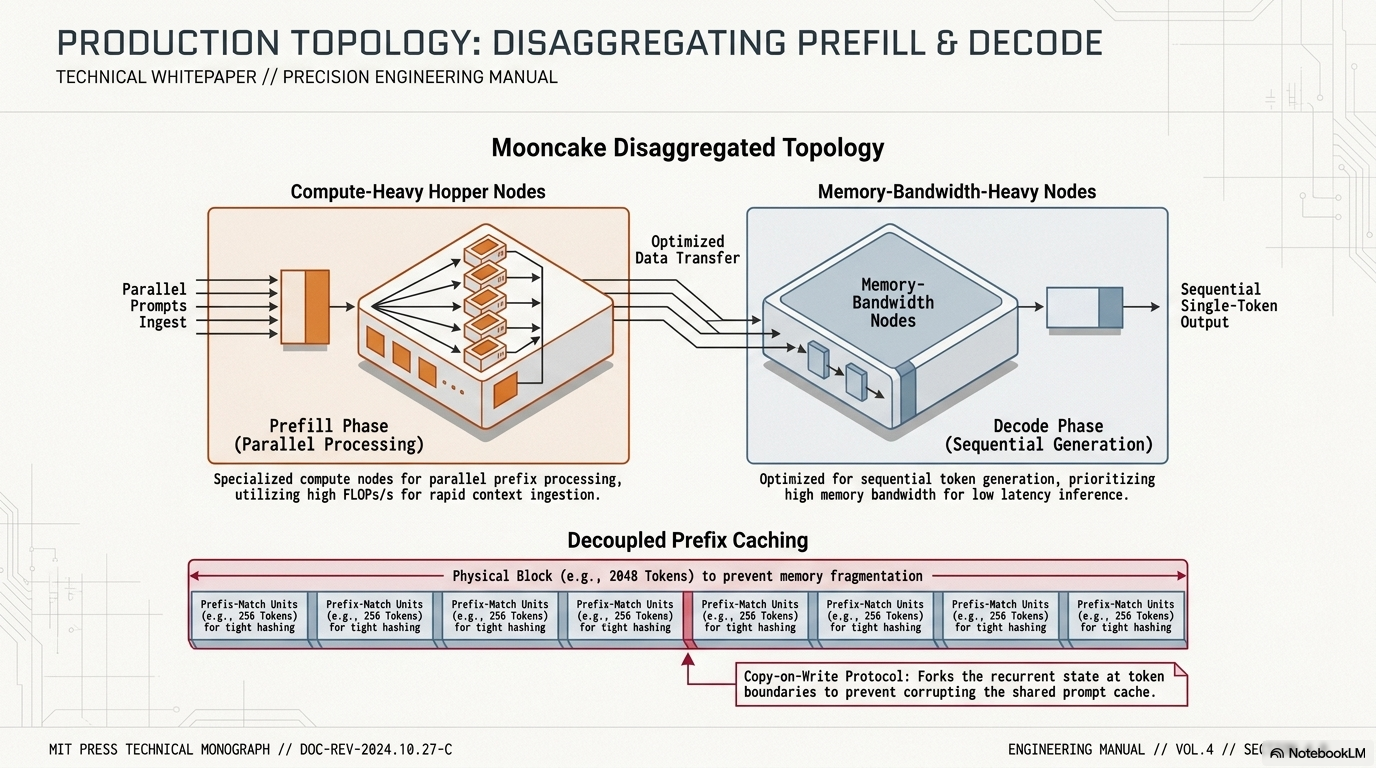
Low-precision NVFP4/FP8 quantization scaling, safetensors zero-copy mmap loading, PagedAttention/RadixAttention serving schedulers, and disaggregated prefill/decode topologies.
Prefill vs. Decode Latency & Throughput Calculator
Simulate compute-bound prefill latency (Time-To-First-Token) versus memory-bandwidth-bound decode throughput.
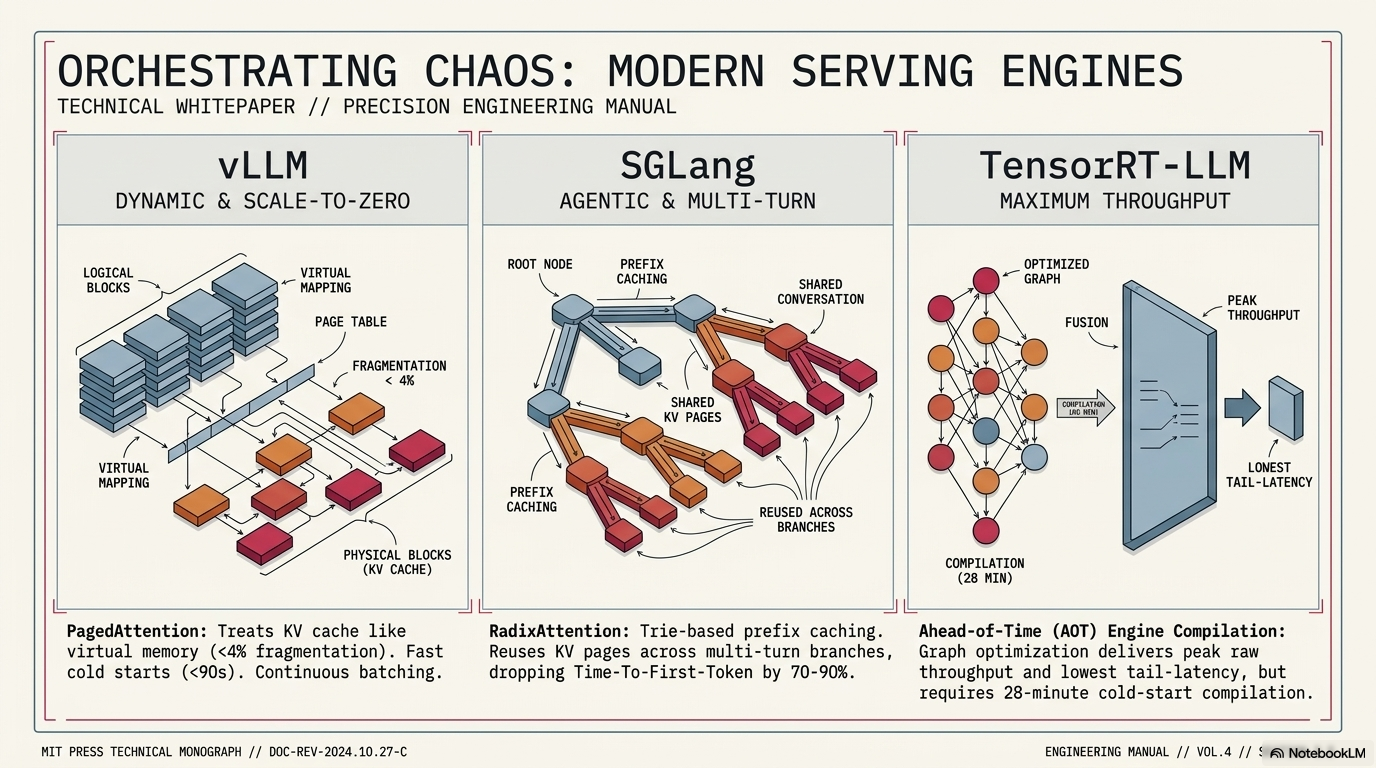
Modern Serving Engine Feature Comparison Matrix
Evaluating PagedAttention virtual memory, Trie-based RadixAttention prefix caching, and Ahead-of-Time CUDA compilation.
PagedAttention & Scale-to-Zero
Treats KV cache memory like OS virtual memory paging, reducing VRAM fragmentation to < 4%. Supports continuous batching and rapid cold starts (<90s).
- Optimal For: Dynamic multi-tenant cloud APIs & scale-to-zero serverless deployments.
- KV Cache Strategy: Virtual Block Page Tables allocated dynamically per request.
RadixAttention & Agentic Reuse
Uses Trie-based RadixTree structures for automatic prompt prefix caching. Reuses KV cache pages across multi-turn branches, dropping TTFT latency by 70% – 90%.
- Optimal For: Multi-agent tree search, CoT reasoning, and multi-turn chat applications.
- KV Cache Strategy: Trie-based node caching with Copy-on-Write state forking.
AOT CUDA Graph Compilation
NVIDIA ahead-of-time (AOT) graph compiler that fuses kernels for maximum raw hardware throughput and lowest tail-latency, at the cost of a 28-minute cold-start compilation.
- Optimal For: High-volume, static production workloads with strict SLA tail-latency bounds.
- KV Cache Strategy: Static HBM memory allocation with AOT fused kernel graphs.
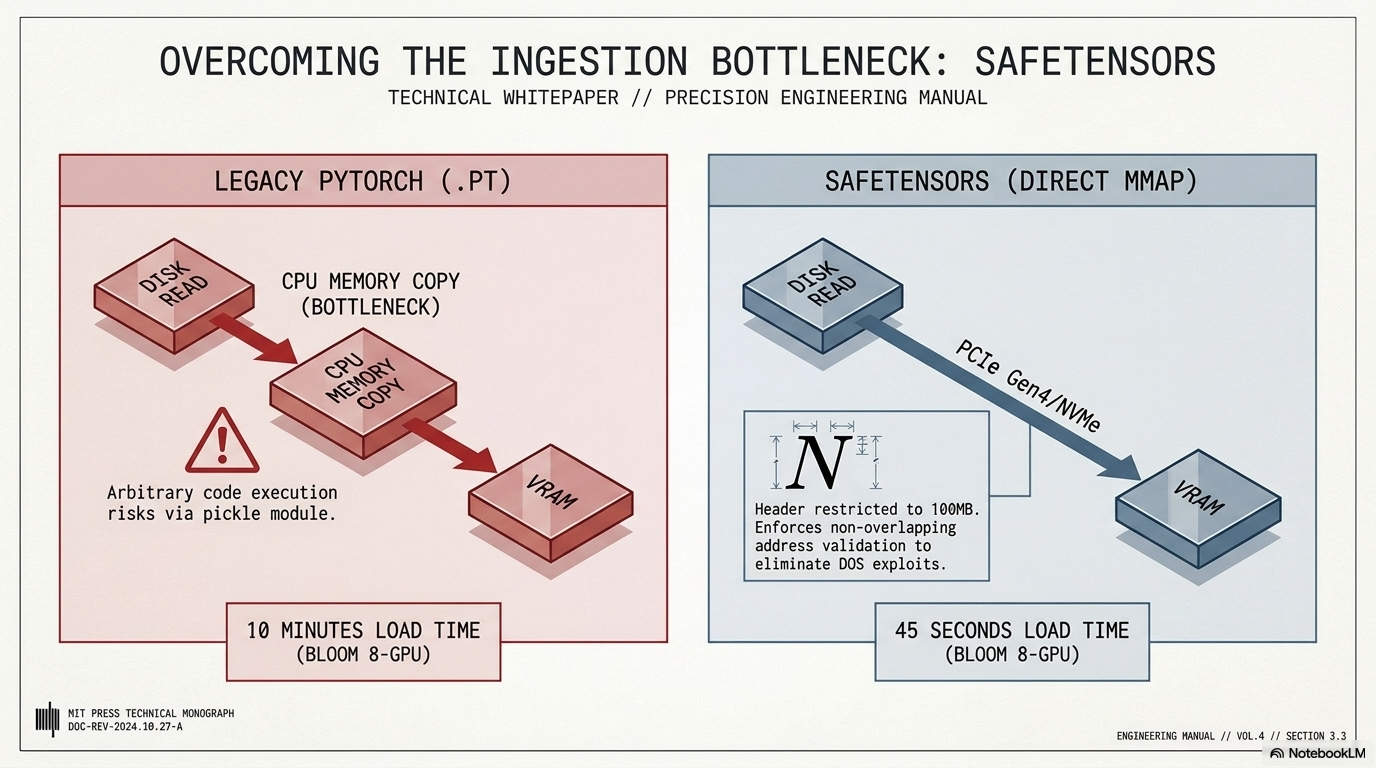
Safetensors Direct mmap vs. Legacy PyTorch (.pt)
Eliminating arbitrary code execution vulnerabilities while cutting 175B model loading times from 10 minutes to 45 seconds.
PyTorch Pickle (`.pt` / `.bin`)
Uses Python `pickle` module, introducing critical Remote Code Execution (RCE) vulnerabilities via `__reduce__` shell injection exploits.
Safetensors (`mmap`)
Direct OS kernel memory mapping (`mmap`), header restricted to 100MB, non-overlapping address validation guaranteeing zero RCE attack vectors.
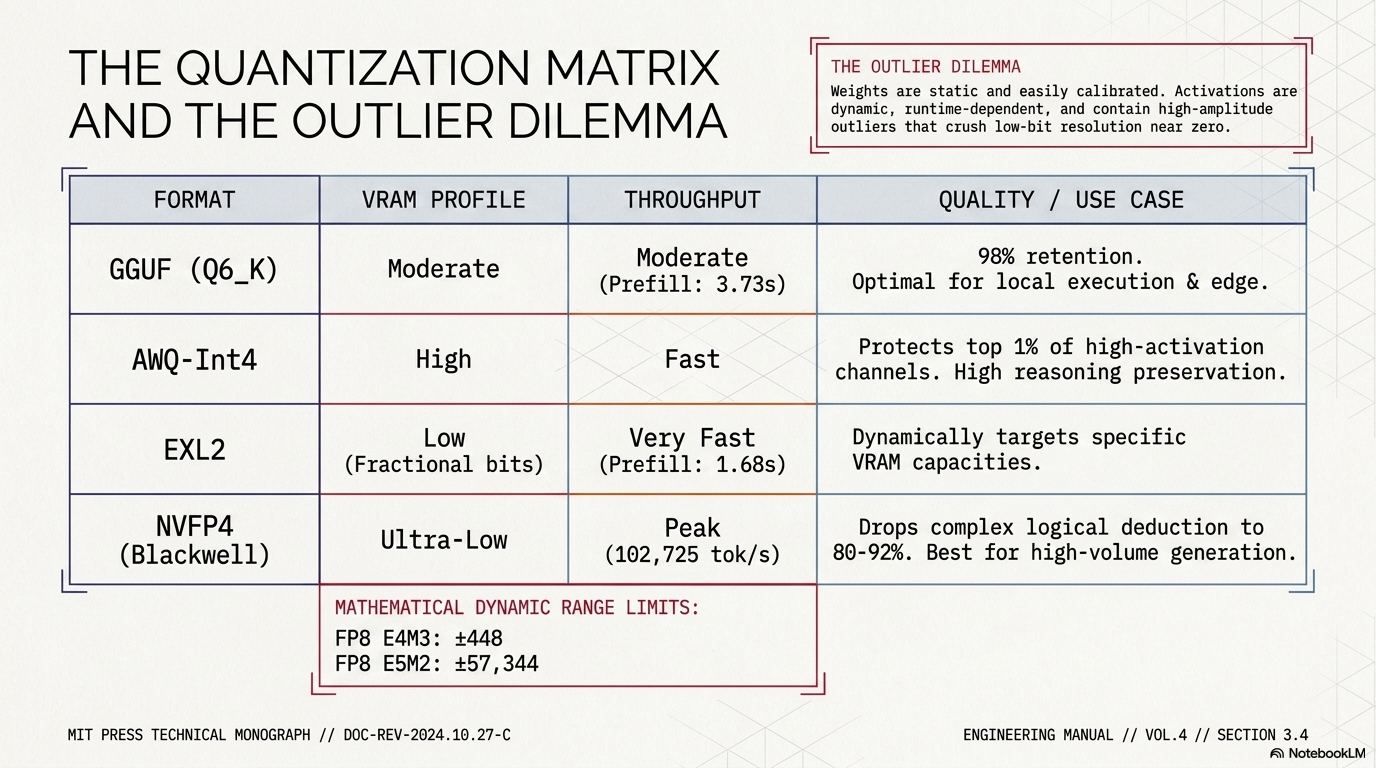
Precision Format & Throughput Scaling Matrix
Comparative benchmarks measuring VRAM footprint, prefill latency, and decode throughput across precision formats.
| Format | Bit Precision | VRAM Profile | Prefill Latency | Decode Throughput | Reasoning Accuracy |
|---|---|---|---|---|---|
| FP16 / BF16 | 16-bit | Baseline (100%) | Baseline | Baseline (~20 tok/s) | 100% SOTA |
| GGUF (Q6_K) | 6.5-bit | Moderate (-58%) | 3.73s | ~45 tok/s | 98.5% Retention |
| AWQ-Int4 | 4-bit | Low (-75%) | 1.68s | ~75 tok/s | 96.0% Retention |
| Blackwell NVFP4 | 4-bit Micro-scaled | Ultra-Low (-75%) | 0.45s | 102,725 tok/s | 95.5% Retention |
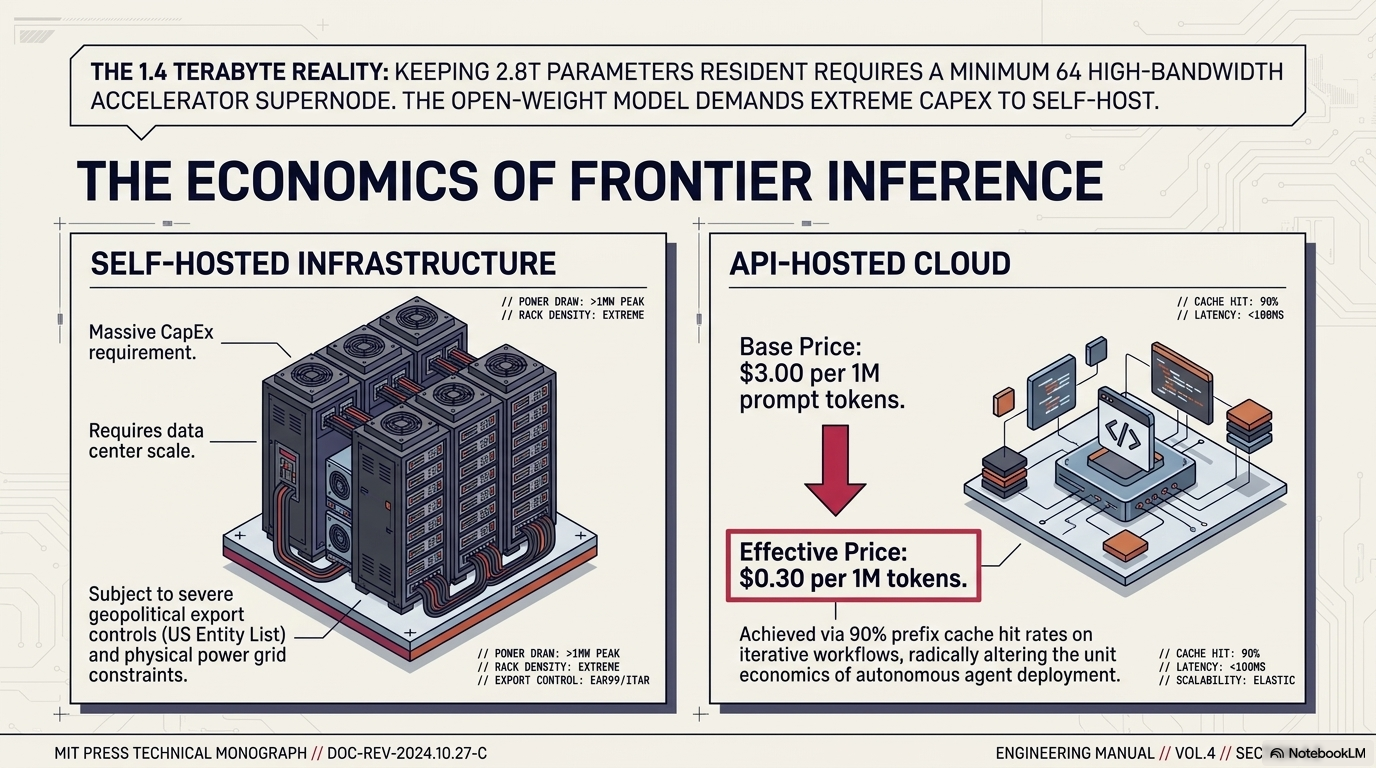
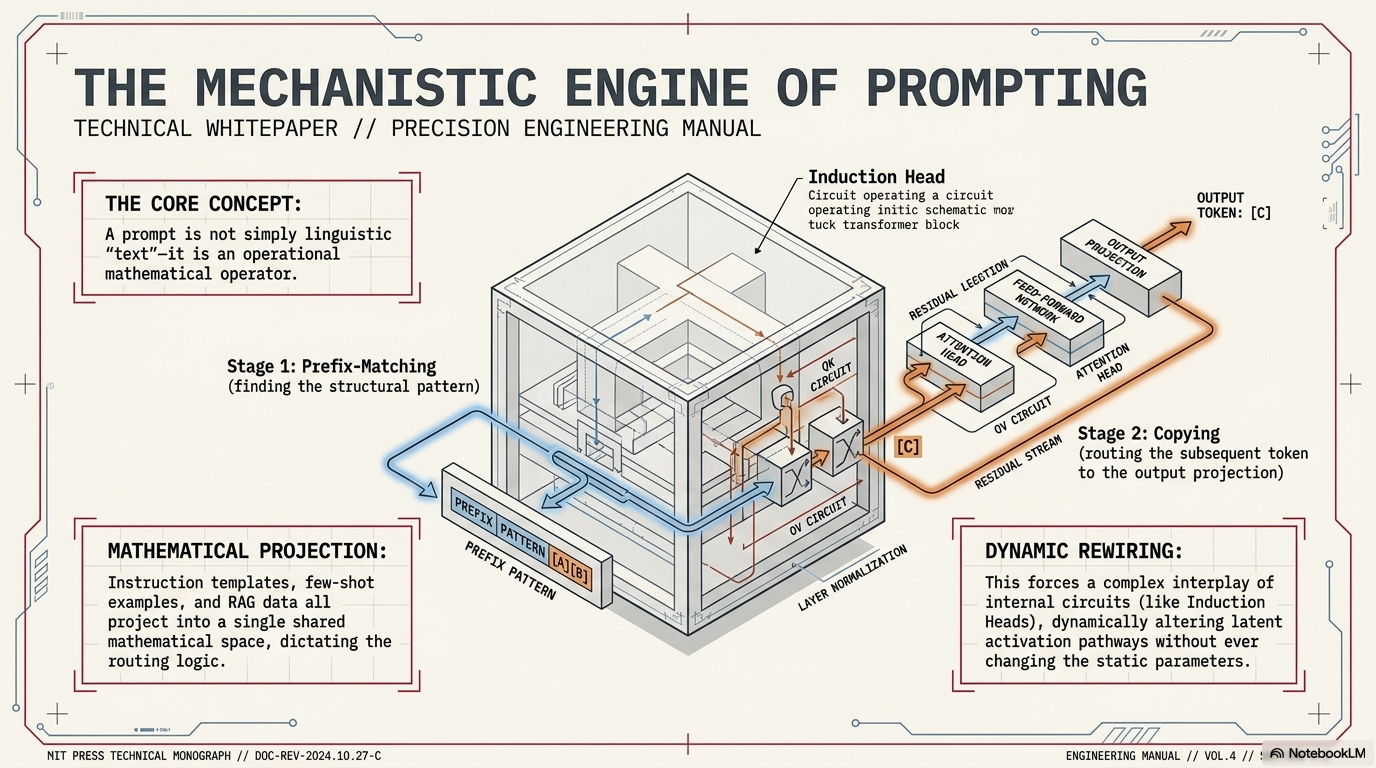
Frontier Inference Engineering Slide Deck Inspector
Click any slide to open the high-resolution lightbox inspector with slide details and OCR technical breakdown.